





Gold Sponsor
Bronze Sponsor





2024
Speakers
THANK YOU TO OUR 2024 SPONSORS
Gold Sponsor
Exhibitors
Hospitality Supporters
I am a researcher in sustainable built environments and urban climate resilience, with expertise in nature-based solutions, green-blue infrastructure, urban heat mitigation, cool materials, and regenerative urban systems. My research focuses on integrating ecological and technological innovations to enhance climate adaptation, environmental performance, and community wellbeing in cities.
My emerging interests include urban agriculture, hydroponics, and controlled-environment agriculture as pathways towards more sustainable and climate-resilient urban futures. I have contributed to 12 peer-reviewed publications, including multiple Q1 journal articles as first author, with over 220 citations on Scopus. Through the CSIRO ON Prime program, I have engaged with industry stakeholders across the winery and industrial hemp in Australia’s agriculture sectors, exploring opportunities to translate research into practical solutions and innovation.
Beyond research, I collaborate with schools, community organisations, and industry partners on sustainability initiatives including grant applications and fundraising, which I had successfully securing over AUD $33,000 for multiple student leadership projects related to circular economy, entrepreneurship, and social impact, which including the development of a regenerative community urban farm project, plastic recycling workshops, and ongoing project with local school on a sensory green wall project.
My long-term goal is to advance research and partnerships that create measurable environmental, social, and economic impact through climate-resilient and regenerative urban systems.
Dr Hing-Wah Chau is Associate Professor in Built Environment and Course Chair in Architectural Design. Before joining Victoria University in 2019, Dr Chau taught architectural design at the University of Melbourne at undergraduate and postgraduate levels for eight years (2011-2019). He completed his doctoral research and the Graduate Certificate in University Teaching at the University of Melbourne in 2014 and 2018 respectively.
Dr Chau received the Teaching Excellence Award at the Faculty of Architecture, Building and Planning at the University of Melbourne in 2018 and the Citation for Learning and Teaching Excellence at Victoria University in 2022. His research interests lie in sustainable built environment, sustainable materials, phytoremediation, architectural and urban design, as well as design for health and wellbeing. He has published numerous refereed journal articles, refereed conference papers and book chapters.
Dr Chau received his architectural education in Hong Kong. He has more than ten years of professional practice experience in Hong Kong as a registered architect in an interdisciplinary environment involving in various projects from small public structures and public housing to large infrastructure.
Kirstie is a building designer and founder of Shelter Building Design, with extensive experience in natural and high-performance building and over 15 years experience in hempcrete and sustainable construction. She is also a PhD candidate at UNSW, researching low-carbon hemp and clay building materials and their potential for code-compliant construction.
Together with Jeremy Thomas, she co-founded the Hemp Building Directory, an industry platform connecting Australia’s growing hemp construction community with materials, professionals, projects and knowledge. Kirstie has played an active role in supporting the growth, connection and professionalisation of Australia’s hemp building industry.
Jasmine Ireland is a final-year Bachelor of Animal Science (Honours) student at Charles Sturt University. Her Honours research explores the use of hemp seed meal in beef cattle diets and its effects on meat quality.
Jasmine looks forward to sharing findings from her research and contributing to future discussion around the use of hemp in livestock production.
Dr. Nana Bortsie-Aryee is a Sustainability and Strategy specialist with deep expertise in Life Cycle Assessment (LCA). He is Global GreenTag’s Program Director. In this position, Dr. Bortsie-Aryee is responsible for overseeing all standards and certification-related technical aspects of the current Global GreenTag Product Assessment systems. This includes the ongoing development of the Global GreenTag Product Certification Standards, Global GreenTagCertTM, the Global GreenTag EPD, Product Health Declaration (PHD), and Modern Slavery Transparency Declaration (MSD) programs.
Nana has nearly 20 years of experience working extensively in sustainability and environmental management across both developed and developing countries, including Africa, the United States, Germany, Eastern Europe, Asia, and New Zealand. He is a GSAP, a WELL AP, and also serves on the board of ALCAS.
Tim has been farming in Tasmania for the last 20 years, in 2003 the family purchased Woodlands a 350ha farm near Deloraine in Northern Tasmania. Primarily a beef trading and dairy agistment farm they also grow potatoes and hemp.
In 2016 Tim became president of the Tasmanian Hemp Association and has since advocated for the Tasmanian hemp industry. In August 2022 after 6 years, Tim stood down as President of the THA after having overseen the development of the Association into an effective advocacy organisation for the Tasmanian hemp industry.
Tim also sits on the TFGA Meat Council, longstanding chairman of the Deloraine Landcare Group, past chairman of the Meander Valley Council NRM committee and committee member of the Meander Valley Water Users.
In 2020 Tim became the founding president of the Australian Hemp Council, a 7 member council representing each state and NT on behalf of Industrial Hemp Industry growers and processors. After 5 years in the role as AHC president and having secured the establishment of a Senate enquiry into the industry with the view to bring about legislative change in favour of the industry, on 29th March Tim resigned as president of the AHC. He is now dedicating his time on his own business pursuits
Dr Sabrina Lucas is a Lecturer in Architectural Sustainability in the School of Architecture and Built Environment at Deakin University, Australia. Her work focuses on sustainable architecture, building performance, whole-life carbon and bio-based materials.
Her background spans architectural practice, sustainability consultancy and international construction, including roles with HIP V. HYPE, GIZ and the University of Stuttgart. She holds a doctorate in architectural engineering, with research focused on housing adaptation and resilience, and is a Certified Passive House Designer. Her current work explores how low-carbon and bio-based materials, including hemp, can be better integrated into architectural practice and education.
Davis George (Bcom at University of Melbourne) works with Austeng, a fourth generation, innovative engineering and design company that builds custom equipment and technical solutions across a range of industries, bringing a background spanning research commercialisation, economic impact analysis, and investment.
He previously led the Hemp CRC bid in 2022, which secured $40 million in cash commitments matched by government funding and a further $100 million in in-kind contributions, though the bid was ultimately unsuccessful.
Dr Natalie Moore is a Research Agronomist with the NSW Department of Primary Industries and Regional Development (NSW DPIRD) and currently leads Theme 2 for the AIHPR, stepping into the role after Dr Sarah Purdy’s departure from NSW DPIRD.
Dr Moore has 32 years of experience in agronomy and plant pathology research delivering practical outcomes for growers of soybean, barley, cotton and banana. In the AIHPR, Dr Moore coordinates a diverse group of scientific experts who are working to deliver improvements in nitrogen use efficiency in low-THC hemp production including improved gross margins through lower input costs and reduced environmental impact of synthetic nitrogen.
Kirstie Wulf and Jeremy Thomas are co-founders of the Hemp Building Directory, an industry platform connecting Australia’s growing hemp construction community with materials, professionals, projects and knowledge.
Kirstie is a building designer and founder of Shelter Building Design, with extensive experience in natural and high-performance building and over 15 years experience in hempcrete and sustainable construction. She is also a PhD candidate at UNSW, researching low-carbon hemp and clay building materials and their potential for code-compliant construction.
Jeremy Thomas is the founder of Environmentarian and a leading voice in hemp building content, education and industry development. Together, Kirstie and Jeremy have played an active role in supporting the growth, connection and professionalisation of Australia’s hemp building industry.
Simon is a Research and Development Project Manager at Midlands, based in Canterbury, New Zealand with a background that combines plant science, biochemistry and commercial agricultural research.
Midlands Seed is a trans-Tasman agricultural business specialising in high-value seed production and premium food ingredients, with operations in Tasmania, Australia, and on the Canterbury Plains in New Zealand. Midlands provides bulk supply of premium Hemp seed for sowing (Grain and Fibre varieties) and is the only company currently producing Certified Hemp seed for sowing in both Australia and New Zealand. Midlands has been evaluating cultivars for local conditions since 2001 and offers a selection of Hemp varieties that have been proven in Australian and New Zealand growing conditions.
At Midlands, Simon leads research and development projects across new business and environmental initiatives, including key research themes such as sustainable seed production and the development of Midlands oil seed business. A notable component of his work has been the development of hemp agronomy and cultivar assessment—helping evaluate how industrial hemp varieties perform under New Zealand and Australian growing conditions and supporting the practical knowledge needed to establish hemp as a viable, science-led cropping option.
Simon is an expert in both hemp and hybrid seed production agronomy, as well as having extensive knowledge in plant breeding and molecular biology. His work reflects a strong interest in plant genetics, biotechnology and using research to improve the future productivity and sustainability of agriculture in Australian and New Zealand farming systems.
John specialises in sustainable landscapes, livelihoods, and community development through innovation and participative action learning.
After a decade as a District Agronomist in Riverina, NSW, John contributed to the cotton industry’s development and the Permanent Raised Bed/Controlled Traffic Farming system. He has worked internationally, including in Cambodia, the Philippines, and Indonesia, implementing sustainable farming practices and pioneering projects like remote sensing for range monitoring and resilient rangeland grazing management.
With more than 15 years of experience living and working between Australia and China, I hope to help connect Australian agriculture with international markets and build stronger relationships with growers, processors and industry partners.
I believe Australia has significant potential in industrial hemp. Our goal is to build an efficient, safe and reliable supply chain that enables Australian hemp products to achieve the international recognition, value and market position they deserve.
By leveraging Australia’s strengths in agriculture, land, research and quality assurance, we aim to compete with established hemp regions such as France and Northeast China. In the longer term, I hope Australian hemp standards can become globally recognised benchmarks for quality, traceability and sustainable production.
Uma Hemp is a sustainable textile brand launched in 2023 by CPL Textile Group, focused on hemp-based innovation for fashion, interiors and functional applications.
For the past 20 years Philip has worked on developing Hemp varieties that would be viable in Subtropical and Tropical Region and has developed models for co-operative farming systems – new processing systems and markets for hemp and other fibre-related products. Philip is one of few natural fibre industry architects. His contacts, depth of knowledge of this industry, its politics, business and technical capabilities, is unique in the world today. Philip has been published and co-authored a number of professional journals and publications on natural fibres and the industry in general.
I provide services and consultancy to a range of clients mostly related to Agriculture. Services are provided to both large organisations and one-on-one clients. One of my specialties is industrial hemp, providing agronomy and agribusiness advice. I was co-author of the BMP Manual and Pesticide Review.
With over two decades working with Hempcrete, Johan T of HempBLOCK® has witnessed the significant growth of the Australian hemp construction industry. HempBLOCK International (HBI) is advancing hemp construction globally through innovative, fast, and efficient building systems.
Johan looks forward to sharing the latest US developments and announcing future opportunities for interested parties and HempBLOCK International.
I am the founder of X-Hemp Pty Ltd, Tasmania’s only hemp fibre processing facility, one of a small handful currently operational in Australia, and the only majority female-owned and entirely women-operated facility of this type in the world.
After many years creating and running start-ups with and for others in the USA, and after surviving the loss of two homes in massive natural disasters (bushfire and flood), I decided to work in an area where I could make a real difference mitigating the worst effects of the climate crisis from both ends of the supply chain. Returning home to Tasmania in 2019, I now dedicate myself professionally to the rapidly emerging industrial cannabis industry.
Maxine Shea is the co-founder of Hemp Collective, an award-winning Australian business based in the Byron Shire. Alongside her husband Mike, she has grown the brand for the last 8 years from its grassroots beginnings to being stocked in over 300 stores nationwide with 1000’s of happy customers.
Driven by personal health issues and a passion for sustainable living, Maxine has shaped Hemp Collective’s innovative range of hair, body, and pet care products. Her expertise spans zero waste, sustainability, education, and advocacy, positioning hemp as a vital part of eco-conscious lifestyles. With a background in marketing and a strong commitment to sustainable practices, she champions hemp awareness across Australia through her brand, inspiring stockists and customers to embrace mindful, future-focused choices with hemp.
Chris Ball is a builder and construction consultant with over 20 years’ experience across custom homes, project management, and sustainable innovation. After years of hands-on building, he co-founded Otetto together with Harrison Marsh to solve the inefficiencies of hempcrete installation by combining it with prefabricated SIPs.
Chris brings deep insight into project delivery, client-side integration, and performance-led design. His goal: to make sustainable building faster, smarter, and financially viable for everyone.
Leigh Fletcher has developed sound knowledge and understanding of hemp processing, products and market dynamics during the development of Murray Industrial Hemp and its hemp precinct project.
Leigh has also built strong relationships with industry partners, investors, growers and local stakeholders, enhancing their ability to execute complex projects.
Ernesto Valenzuela is a Senior Lecturer in Agricultural Economics at La Trobe University, Australia. He holds a PhD in Agricultural Economics from Purdue University (USA) and an MSC in Agribusiness from Southern Illinois University (USA). He has authored over 90 scholarly publications in agricultural economics, socio-economics indexes, climate change, and regional economics.
Beyond academia, Ernesto has advised governments and international agencies through consultancy and commissioned work, including projects for the World Bank, United Nations, CSIRO, AgriFutures, Regional Development Victoria, and Rio Tinto.
His recent research includes the 2024 report Hemp in Gippsland: Potential Multi-Industry Development (prepared for CSIRO and Regional Development Victoria), exploring hemp’s role in regional diversification. In 2025, he co-authored a report for the Warner Research Institute on the economic viability of hempcrete as a low-emissions, affordable material for modular housing.
Klara Marosszeky is the Founder/ Managing Director of Australian Hemp Masonry, Australia’s lead organisation in hemp building materials research.
AHM manufactures in Sydney and supplies BCA compliant Australian hemp building materials for new residential and commercial builds and retrofits. 2 recent commercial projects have won national and international architectural awards.
As a qualified educator, Klara delivers training to Owner Builders and Builders and works closely with Architects and Building Designers, as well as hemp processors. She has been involved in hemp cropping since 1999 and building materials research since 2000 and is actively involved in the AU NZ Standards Working Groups.
Richard Barge is President of the New Zealand Hemp Industries Association (NZHIA) and a long-standing advocate for the development of a thriving industrial hemp industry across New Zealand and Australasia.
Richard has been involved in the hemp sector since 1994 and has played an active role in the NZHIA since 1998, serving as Treasurer and Deputy Chair before becoming Chairperson in 2020. With a professional background in business, finance and administration, he brings both commercial insight and decades of industry knowledge to his work.
Passionate about the potential of industrial hemp, Richard champions its role across food, fibre, construction, biomaterials and other sustainable industries. He works closely with growers, processors, businesses, researchers and policymakers to encourage collaboration, remove barriers and build market opportunities.
As Conference MC, Richard brings extensive industry knowledge, energy and a strong commitment to the AIHC 2026 theme, “Growing Together”.
Travis is the Chief Technical Officer at Rubisco, a natural textiles company based in Christchurch, New Zealand. He has a PhD in pasture agronomy and also brings a diverse technical background to the role that includes various agri-technologies and decorticator development.
The traditional focus of Rubisco has been on woollen textiles, however, over the past decade, the company has developed a broader natural fibre strategy that includes hemp and hemp/wool blends. This has been accompanied by a shift from traditional soft flooring textiles, to include products that span the broader built environment.
Rubisco’s majority shareholder, Carrfields, offers a breadth of experience and capability across New Zealand agribusiness; spanning, machinery, seed, livestock, wool and investment. Together, Carrfields and Rubisco offer a fully vertically-integrated approach to natural textiles – importing varieties, growing seed, managing field operations, processing raw materials, and delivering finished products.
Travis is drawn to the complexity that comes with bringing hemp from seed to finished product – a process where every step affects the next, and success depends on continuous adaptation, lateral thinking and understanding the tradeoffs that come with natural products.
Full payment is required on receipt of tax invoice to secure your Sponsorship, Advertising and Exhibition requirements, including your Booth Allocation. Full payment of all invoices, including your representative/s registration and related fees, must be received prior to commencement of the Event to ensure admittance to the Event, unless by prior approval.
All prices quoted exclude GST.
The Organising Committee reserves the right to refuse an application.
The Organiser will endeavour to meet all your selected participation requirements. If your selected requirement/s is not available the Organiser will contact you as soon as possible to discuss alternatives.
Booth cancellations must be in writing. Deposit less a cancellation fee will be refunded only if the booth can be re-sold.
Sponsors and Exhibitors agree to abide by such conditions as laid down by the Organising Committee and agree not to violate any of the lease conditions of the building in which the Event is being held.
If the Sponsor/Exhibitor fails to comply with any of the rules and regulations laid down, or any requirements stipulated, the Organiser has the right to sell the space or enlist a replacement Sponsor/Exhibitor and the Sponsor/Exhibitor will forfeit all monies paid.
Acknowledgement of Sponsors in the Program / Resource Book is dependent upon the date of the Sponsor’s booking, provision of the Sponsor’s logo and printing date of the books.
All signage, collateral, advertisements and any other artwork for any participant must be provided to the Organiser for approval. The Organiser reserves the right to reject anything that it considers inappropriate.
The Organiser reserves the right to redesign the floor plan to the benefit of Exhibitors, as it sees fit.
Exhibitors must have third party liability insurance cover. A Certificate of Currency is to be provided on request.
Exhibitors must not erect any sign, display or obstruction which intrudes into any adjoining Exhibitors’ space or affects the safety of the venue.
Exhibitors must not damage in any way the walls, floors, ceilings or any other surface of the exhibition area or the Exhibitor will be liable for all associated charges due to the venue.
The Organiser accepts no responsibility whatsoever for any actions, suits, proceedings, claims, demands, costs and expenses, which may arise from the supply of samples or other material by participating Sponsors/Exhibitors to any person.
The Organiser will take all precautions it considers necessary for the protection and security of exhibited articles but will not be responsible for the safety, loss, damage or compensation of any exhibit or other property under any circumstances whatsoever.
Participants must not on-sell sponsorship opportunities, sub-let exhibition tables or display products or programs that have not been officially endorsed by their company without the prior approval of the Organiser.
The Conference Organiser may shorten or lengthen the duration of the exhibition and alter the hours during which the exhibition is open.
Unforeseen Circumstances / Force Majeure – If any act of terrorism, civil disturbance, industrial action, epidemic, natural disaster or event beyond the Organiser’s control prevents us from carrying out our obligations will not be liable for non-performance or refund.
 Exhibition Table



Anthony Fowler is a Visiting Scientist at SARDI Aquatic Sciences (SA), where he had been a Research Scientist for nearly 30 years. He is a fish population biologist and fishery scientist having focussed on the population biology, life histories, and fishery assessment for species such as King George Whiting, Southern Garfish, and Snapper.
Previously, he had worked on species from a variety of ecosystems during his post-graduate work at the University of Sydney, and post-doctoral positions at AIMS in Townsville and in Canada. Although his work has involved a diversity of techniques, it has particularly used the retrospective application of otolith methodologies.
Anthony has been a member of the ASFB since the 1980s and served as the SA State Representative during the 1990s and 2000s. He was appointed to the Hall of Fame in 2021 and is the current nominee of the K. Radway Allen Award.
Rob has extensive experience and expertise in the agriculture industry, honing valuable skills in business and project management, agronomy, sales, and customer management. He is adept at navigating complex farm management practices, delivering quality customer service, and engaging with various stakeholders.
Throughout his 35-year career, Rob has encountered a wide range of challenges and opportunities. He has a track record of successfully commercialising new technologies, demonstrating his forward-thinking approach and adaptability in an ever-evolving agriculture industry.
Specifically, Rob offers expertise in farm management, sales and marketing, customer relationship management, technology adoption, plus crop, horticulture, and grazing practices.
Alana is a consulting Director at Common Capital, focused on driving deep decarbonisation and atmospheric carbon removal. Her expertise is in systems based approaches to scaling net zero solutions, orienting technical challenges in their social, economic, business model, supply chain, policy, regulatory and ecosystem contexts.
Her projects focus on understanding the sources of value and risk in the net zero transition across stakeholder groups, and developing capability to adapt to rapidly changing international, regulatory, market and technology contexts.
Alana is also a Director at the Climate Recovery Institute, a not-for-profit institute with a mission to scale atmospheric carbon dioxide removal in Australia. Prior to joining Common Capital, she held previous roles at Deloitte & Commonwealth Bank, where she designed and managed large regulatory and strategic projects.
Larry Smart is a professor of Plant Breeding and Genetics at Cornell University based at Cornell AgriTech in Geneva, NY since 2009.
He is a plant geneticist and breeder working to breed improved cultivars of three crops: hemp; shrub willow for bioenergy; and hop for craft breweries in New York. His research focuses on hybrid vigor, sex determination, and disease resistance.
He earned a BS in Biology from Cornell University, PhD in Genetics from Michigan State University, and was an NSF post-doctoral fellow at UC Davis.
Tim has been farming in Tasmania for the last 20 years, in 2003 the family purchased Woodlands a 350ha farm near Deloraine in Northern Tasmania. Primarily a beef trading and dairy agistment farm they also grow potatoes and hemp.
In 2016 Tim became president of the Tasmanian Hemp Association and has since advocated for the Tasmanian hemp industry. In August 2022 after 6 years, Tim stood down as President of the THA after having overseen the development of the Association into an effective advocacy organisation for the Tasmanian hemp industry.
Tim also sits on the TFGA Meat Council, longstanding chairman of the Deloraine Landcare Group, past chairman of the Meander Valley Council NRM committee and committee member of the Meander Valley Water Users.
Tim is also president of the newly formed Australian Hemp Council, a 7 member council representing each state and NT on behalf of Industrial Hemp Industry growers and processors.
Tobias Kretzschmar is professor of plant breeding and genetics at Southern Cross University (SCU), Australia, with expertise in functional genomics of natural products and functional food crops.
Co-lead of the SCU harvest to Health Research Impact Cluster.
Prior to joining SCU spent seven years at the International Rice Research Institute (IRRI), Philippines, as Senior Scientist in Molecular Genetics with focus on molecular breeding technologies.
PhD from the University of Zurich, Switzerland, in Molecular Plant Physiology with a project on characterizing plant secondary metabolite transporters.
Diploma in Biology from the Technical University of Kaiserslautern, Germany.
Mick Andersen is the owner and managing director of Good Country Hemp, a South Australian based hemp foods processing company.
Mick was raised on a farm in central Victoria and graduated from Melbourne University with an honours engineering degree in Agriculture. In 2000 Mick established a shed design, construction and project management business focussed on the pig and poultry industries. Then after 18 years he decided to shut it down and start again – in hemp.
Knowing basically nothing about hemp, Mick and his wife Linda set about building a hemp foods business from scratch – contracting farmers willing to grow hemp, building a processing plant and finding new markets for their products. Their journey has been successful and life-changing.
Gaye Krebs from Charles Sturt University has become an expert in the areas of ruminant nutrition and alternative feeds for livestock.
In recent years the focus of her research has been on the utilisation of industrial hemp biomass as feed for sheep, investigating its effects on feed intake, nutrient digestibility, rumen parameters and carcass residues.
Recently, the research on industrial hemp has also extended to include pharmacokinetics and pharmacological studies of cannabinoids in sheep as well as effects of cannabinoids of rumen microorganisms in both sheep and cattle.
Anna Maskiell is a registered Architect and co-founder of Footscray-based architectural consultancy Public Realm Lab.
She is an advocate, researcher and adviser on the ways in which the built environment can foster inclusivity, creativity and sustainability by putting human experience at the centre of strategic and design thinking.
Anna has over a decade of major project experience spanning master planning, strategic facilities planning, architectural design and delivery for local councils, state government departments, not-for-profit organisations and tertiary institutions. She led the design and delivery of the first public Class 9b hemp masonry buildings in Australia for Mildura Rural City Council from 2020 – 2023.
She is the recipient of the Dulux Study Tour and Marten Bequest Scholarship.
Richard has served as Chair of the NZ Hemp Industries Association (NZHIA) for the last three years. NZHIA is a non-profit incorporated society involved with promoting the economic, environmental, health and social benefits of the NZ Hemp Industry.
NZHIA supports bio regional developments, based on phytoremediation of soils and sustainable production of arable and horticultural crops, producing seed, fiber and health products, grown and processed locally.
Richard’s hemp journey started in 1994 and he became involved with the NZHIA in 1998. He is a qualified accountant, with experience in industry and in practice, both in New Zealand and England.
He is based in Paeroa, which is in the mighty Waikato (south of Auckland) and is co-owner of two hemp companies—Hemptastic NZ Ltd and Hemp Seeds Foods Ltd, which take pride in using 100% hemp that is 100% New Zealand made, while striving to use an ethical and sustainable approach to the use of resources and the environment.
Mark Skewes joined the South Australian Department of Agriculture in 1986, and currently works for the South Australian Research and Development Institute (SARDI), at Loxton Research Centre. Mark has many years of experience in research of irrigated tree and vine crops, including variety and rootstock comparisons, irrigation scheduling, and soil and plant water monitoring.
In 2017 Mark commenced industrial hemp research on behalf of the South Australian government. In 2021 Mark was appointed as the National Coordinator for AgriFutures Australia’s Industrial Hemp Variety Trials, and he also oversees the two South Australian IHVT sites.
After many years creating and running start-ups with and for others in the USA, Andi is now home in Tasmania and has dedicated herself professionally to the industrial cannabis industry in Australia.
Andi Lucas is the founder of X-Hemp Pty Ltd, Tasmania’s only hemp fibre processing facility and one of only a small handful currently operational in the country, and the only 100% female-owned and operated facility of this type in the world.
Securing loans as pre-seed capital to launch in mid-2021, in October 2023 Andi had raised just over $1.5 million via the crowd-sourced funding platform Birchal, welcoming close to one thousand new shareholders for next state of growth. Over the past two years, she has secured supply lines, worked through innumerable start-up challenges, more than doubled the number of hempcrete homes built in Tassie over the past decade, and are ready to scale.
Dr. Jan J. Slaski is an Expert Researcher with the Bio-Industrial Services Division of InnoTech Alberta, Vegreville, Alberta. He obtained a B.Sc. and a M.Sc. in agronomy from the Warsaw Agricultural University, Poland and Ph.D. from the Plant Breeding and Acclimatization Institute, Poland. In 1993 he arrived in Canada to continue his study as a postdoctoral fellow in the Department of Biological Sciences at the University of Alberta, Edmonton. After successful completion of his university training in 1998, Jan assumed a plant-soil research scientist position at the Alberta Research Council (presently InnoTech Alberta).
During the last 22 years Jan has been leading research aimed at introduction and breeding of industrial hemp varieties that suit the needs of industries utilizing fibre, grain and cannabinoids-laden crop parts. Jan has been also leading extensive studies focused on the development of best management practices permitting sustainable hemp production under changing environmental conditions. For over two decades Jan has been working for the hemp industry and with the hemp industry stakeholders to make this crop a viable and profitable cropping option for Canada. To fully realize the potential residing within industrial hemp and to assure whole crop utilization, Jan has assembled at InnoTech Alberta a program offering solutions from “Seed to Final Product“ that includes three domains: breeding/agronomy, analyses/processing and product development. Since 2012, Jan has been serving the hemp industry as a director of the Canadian Hemp Trade Alliance and since 2021, as a director of research and academia on the Alberta Hemp Alliance board.
In 2003 for his contribution to agricultural industry in the Province, Jan received a Distinguished Agrologist Award from the Alberta Institute of Agrology. In 2022, Jan’s outstanding contribution to the development of the Canadian hemp industry was recognized in the form of Dr. Ernest Small Industry Leadership Award conferred by the Canadian Hemp Trade Alliance and The Queen Elizabeth II’s Platinum Jubilee Medal granted by the Province of Alberta.
Kylie O’Brien is Chief Scientific Officer at Cannim Group, a medicinal cannabis company located in Manly, Australia with business interests in the US, UK, Canada, Germany and Jamaica. Professor O’Brien previously worked as a clinical optometrist, then completed a Master of Public Health before career changing to Chinese medicine in 2000. After completing her PhD at Monash Medical School, she then entered the higher education sector where she has held senior roles in both Australian universities and private higher education institutions. She previously worked for the Victorian Department of Human Services on the implementation of the Chinese Medicine Act 2000.
Professor O’Brien is one of Australia’s leading educators in medicinal cannabis (MC) since 2018. Her courses in MC were the first to receive level 1 continuing professional development (CPD) points from the Royal Australasian College of General Practitioners. In 2021, she set up the International College of Cannabinoid Medicine (iccm.co), an online learning platform for healthcare practitioners focused on the evidence base of medicinal cannabis. She has written two books: O’Brien & Blair, Medicinal Cannabis and CBD in Mental Healthcare, Cham: Springer, 2021 and O’Brien & Sali, A Guide to Integrative Oncology, Springer 2017. An experienced clinical researcher, she has recently conducted a two-year observational study investigating the effectiveness and safety of medicinal cannabis, focused on: chronic pain, anxiety, PTSD and multiple sclerosis. She is currently conducting research into the effectiveness of medicinal cannabis in women’s health and has launched an international study, the Lumir Mission Study, that aims to reach over 1 million patients in four years.
She is an Adjunct Professor at Torrens University, an Adjunct Fellow of the NICM Health Research Institute (Western Sydney University), a member of the Australian government’s Tertiary Education Quality Standards Agency (TEQSA) Expert Panel and previous member of the Australian government’s Therapeutic Goods Administration (TGA) Advisory Committee for Complementary Medicine. She sits on the Human Research Ethics Committee of the National Institute of Integrative Medicine.
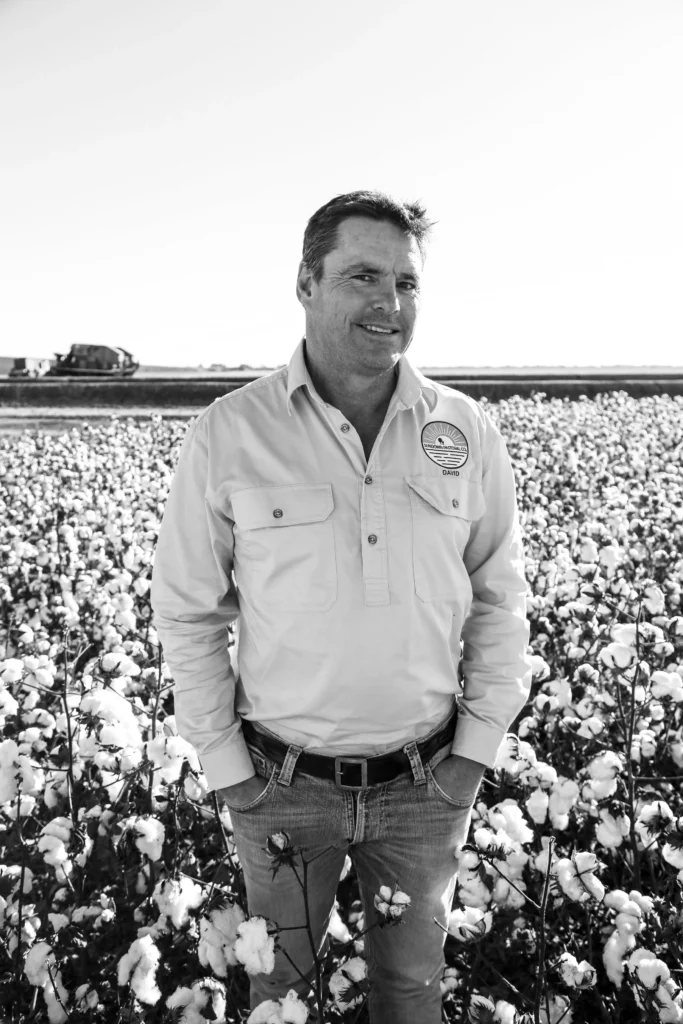
David Statham is the co-founder of FibreTrace Technologies with his wife Danielle. He is also co-owner of the Sundown Pastoral Company and Good Earth Cotton. Together they have created one of the world’s most renowned sustainable agricultural enterprises.
Since 1984 David has been at the forefront of innovation in agricultural technology and the application of regenerative farming techniques. This has resulted in the Sundown Pastoral Company being recognised as one of Earth’s most efficient and environmentally ethical agricultural enterprises, being the world’s first carbon positive cotton farm.
David’s vision is to work in harmony with nature and believes regenerative farming techniques can create a better and healthier planet for generations ahead. It is his passion to transform the fashion supply chain. He is driven daily to leave the planet and its culture a better place for future generations.
David believes that brands need to be connected to the farms they rely on to supply their cotton – and in turn trace the product all the way to the shelf. Creating a supply chain with full visibility that ensures true long term sustainability is the way to achieving this goal.
FibreTrace LinkedIn: https://www.linkedin.com/company/fibretrace/
Good Earth Cotton LinkedIn: https://www.linkedin.com/company/good-earth-cotton/
The Hon. Jeremy Buckingham, MLC is a Member of the Legislative Council and Chair of the Premier and Finance Portfolio Committee.
He was a Member of the Legislative Council from 2011 to 2019 and re-elected in 2023 as a representative of the Legalise Cannabis Party
He has been a long-term passionate advocate for industrial hemp.
The Hon. Tara Moriarty MLC (Minister for Agriculture, Minister for Regional New South Wales & Western New South Wales ) was elected to the NSW Parliament as a member of the Legislative Council in 2019 and was immediately appointed Shadow Minister for Mental Health and Crown Lands. In 2021 she was appointed Shadow Minister for Corrections, Juvenile Justice, and Medical Research.
Prior to her election to Parliament, Ms Moriarty was the Secretary and then President of the United Voice Liquor and Hospitality Division and served as Chair of Club Plus Superannuation.
On the election of the Minns Labor Government in March 2023, Ms Moriarty was appointed the NSW Minister for Agriculture, Minister for Regional NSW and Minister for Western NSW. Ms Moriarty is also currently a member of the ALP’s National Executive and Senior Vice President of the NSW Labor Party.
As Minister for Agriculture and Minister for Regional Development Ms Moriarty oversees the management of NSW’s primary industries, including forestry, and the co-ordination of issues affecting rural and regional communities across the state.
Ms Moriarty is an avid reader, and loves to travel, but her guilty pleasure is trashy TV.
Tony Hunter is a Global Food Futurist Speaker, Food Scientist, author and strategic foresight consultant specialising in the Future of Food and Agriculture. He has spoken on 4 continents and appears regularly in print, podcasts and radio as an expert in the Future of Food.
Tony is a qualified food scientist with more than 30 years experience in the Food Industry. His business experience includes over a decade in senior management, being General Manager of two food companies.
He provides expert and strategic foresight advice on food technology and consumer trends and their industry impacts to Australian and global food companies from PepsiCo to KFC. He also advises VC investors and top four global consulting companies such as Accenture on these topics.
He delivers a unique perspective on the Future of Food based upon his distinctive combination of scientific qualifications, business experience and detailed understanding of food technologies.
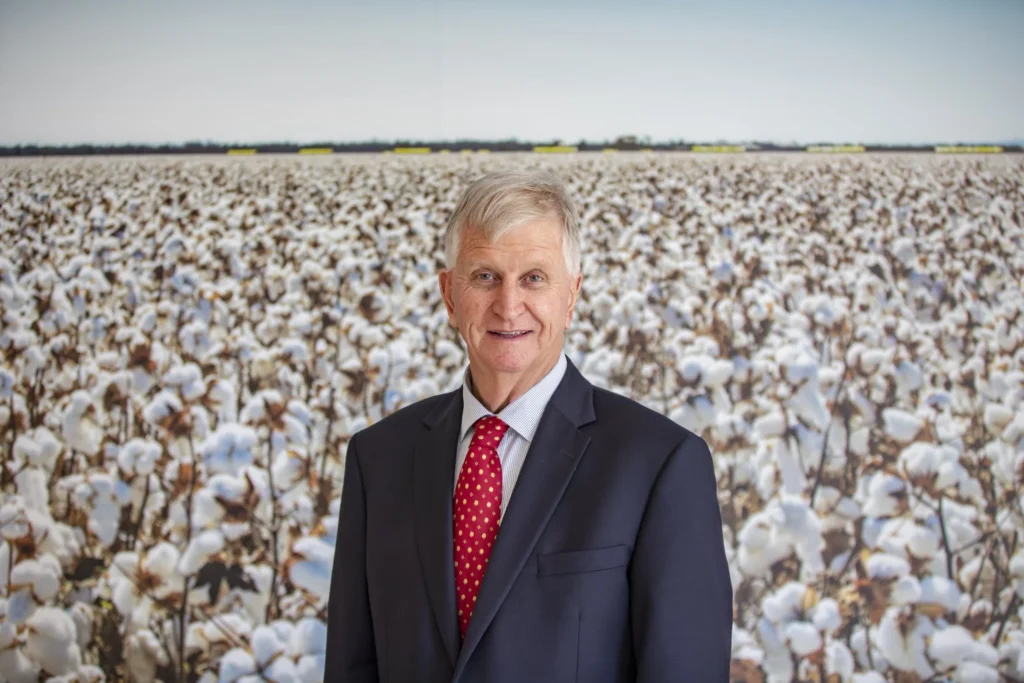
Peter Graham is a Senior Executive and Company Director with over 44 years of experience in agriculture and the Cotton Industry. He holds a Bachelor of Rural Science from UNE, is a Fellow of the Australian Institute of Company Directors and prior to his retirement at the end of 2023 was the Managing Director of Cotton Seed Distributors Ltd (CSD), a position he held for 21 years. CSD is a key industry body within the Australian Cotton industry and the sole supplier of high quality, high yielding cotton planting seed.
He was instrumental in the formation of Cotton Breeding Australia (CBA) an unincorporated joint venture between CSD and CSIRO in 2007, the formalisation of key agreements with world leading agricultural companies, the $110m redevelopment of the processing and seed facilities, QA labs and office complex in Wee Waa, acquisition of significant land and water assets for seed production and trials and the expansion of the company’s activities both domestically and internationally. Under his leadership the company has grown its asset base from $30m to well over $350m while maintaining its structure and ensuring it remains firmly in the hands of the local industry. CSD is well known and recognised as an industry leader around the world.